◆ MOTION DESIGN ·
Hand-Drawn Animation in a Template World
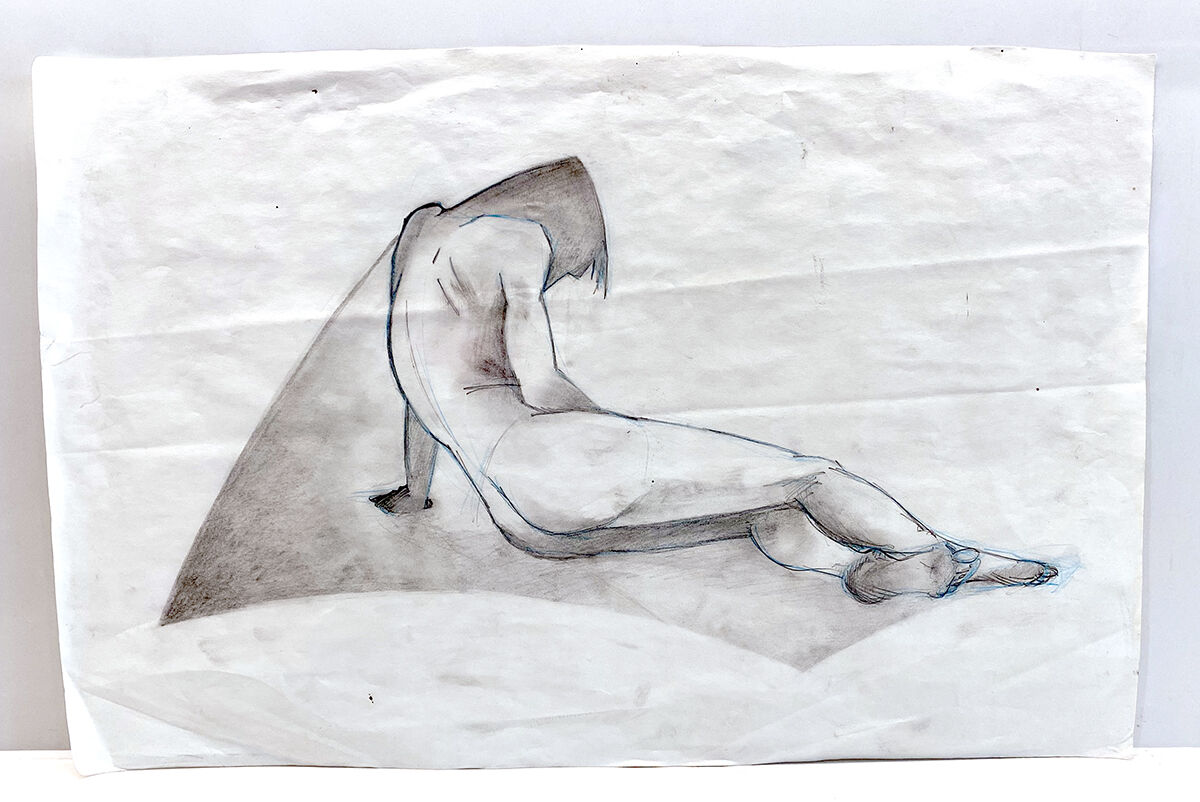
When Everything Looks the Same, the Hand Stands Out
There's a moment you start to notice it. You're watching a brand video, then another, then another, and somewhere around the third one you realize you've seen this before. Same easing curves. Same kinetic text bounce. Same plugin doing the heavy lifting across three different companies in three different industries. The aesthetic is clean, the execution is fast, and it looks exactly like everything else.
That's the template world. And I get it. Templates and plugins exist because they solve real problems: tight budgets, compressed timelines, clients who need good-enough work delivered yesterday. I've used plenty of them. But somewhere in the rush toward efficiency, a certain kind of work started disappearing from the industry, and I made a deliberate choice not to let it disappear from mine.
I kept drawing by hand.
Where the Hand Skills Came From
My training at York University was rooted in fine art. Drawing, painting, building a visual vocabulary with physical tools. That foundation didn't feel like a professional asset at the time so much as it felt like the thing I loved doing. What I didn't expect was that it would survive thirty years of software churn and still be relevant when machine learning started generating images by the millions.
When I moved into motion design, I brought the hand with me. Not as a nostalgic affectation, but because it solved problems that software alone couldn't. A hand-drawn character has a particular life to it. The line wobbles slightly. The proportions are a little expressive rather than geometrically perfect. There's decision-making visible in the stroke itself, and audiences respond to that even when they can't articulate why. They feel it as warmth, or energy, or personality. What they're actually feeling is the presence of another human being inside the work.
Over the years that approach earned real client trust. Work for Seneca, Molson, Bank of America, Scotiabank, Bank of Montreal, Grocery Gateway, Office Autopilot, TriCyclin, and various government projects, all of it drew on hand skills at some point in the process. Sometimes the hand-drawn element was structural, the actual character animation or illustrated scene work. Sometimes it was more subtle, a quality of line or a loose texture that made the finished piece feel less like a render and more like something made by a person. Either way, the brands that hired me for that work understood they were getting something that couldn't be copied by pulling up a template library.
Why Brands Pay a Premium for Imperfection
This is the part that surprises people when I explain it. Brands don't pay more for hand-drawn work because they're being nostalgic or because they want a retro look. They pay more because imperfection, done with craft and intention, signals authenticity in a way that pixel-perfect mechanical output cannot.
Think about what a brand is trying to do when it commissions animation. It wants to create an emotional connection with a real human audience. If the animation itself looks like it was generated by a machine following a formula, that mission is already working against itself from the first frame. When the work carries visible evidence of a human hand, the audience's nervous system responds differently. The connection starts before the message even lands.
Craft has always been cyclical. When offset printing made typeset pages ubiquitous, hand-lettering became precious. When digital photography made perfect exposure trivial, film grain came back as a style choice. Motion design is going through its own version of that cycle right now. The more the baseline moves toward templated output, the more a piece of hand-drawn work stands apart. Scarcity creates value. Not artificial scarcity, but genuine scarcity rooted in the fact that fewer people have kept these skills sharp.
The more automated creative output gets, the more valuable visibly human work becomes. That isn't a romantic idea. It's just supply and demand applied to craft.
Hand-Drawn Work in the AI Era
I want to say something honest about where we are right now. AI image and video generation is genuinely impressive and it is going to reshape a significant portion of the motion design industry. Some of what used to take days can now be prototyped in minutes. I'm not pretending that isn't real.
But here's what I keep coming back to. AI-generated work is trained on what already exists. It optimizes toward the mean. It produces output that is statistically likely given its inputs, which means it is, almost by definition, going to converge on the same visual territory that templates and plugins already occupy, only faster. The thing it cannot replicate is a genuine creative decision made by a specific human with a specific perspective and a specific hand.
The more the automated baseline rises, the more that specific human quality is worth paying for. The brands that understand this are already thinking ahead. They don't want their identity sitting inside the same aesthetic bucket as everything the algorithm spits out. They want something that could only have come from a person.
That's the case for keeping the hand in the toolkit. Not as a museum piece. As a competitive differentiator that has quietly gotten more valuable with every wave of automation the industry has absorbed.
If you want to go deeper on the client work itself, I've written more about it in Motion Design for the World's Biggest Brands. And if you're a brand or agency looking for motion design that brings this kind of craft to your project, my current work and services are at davidzak.com.
Make art every day for 100 days. Get a short daily prompt from my workbook by email and a tracker that fills in as you go. Start the free challenge →
David Zak takes on a limited number of motion design and creative direction projects per quarter. See services, selected clients and availability at davidzak.com.